Hiking
Maulin from Crone Woods: the waterfall, the Way, and a hill that punches above its height
6 Sept 2026 · 6 min read
A week after Djouce I went looking for the next hill that still felt like a Sunday and not an expedition. Maulin is that hill. The Irish is Málainn, “high or sloping ground,” which is almost too honest a name, and you start it from Crone Woods, where the Wicklow Way has already been walking for twenty-odd kilometres out of Marlay Park.
The car park that is also a comma
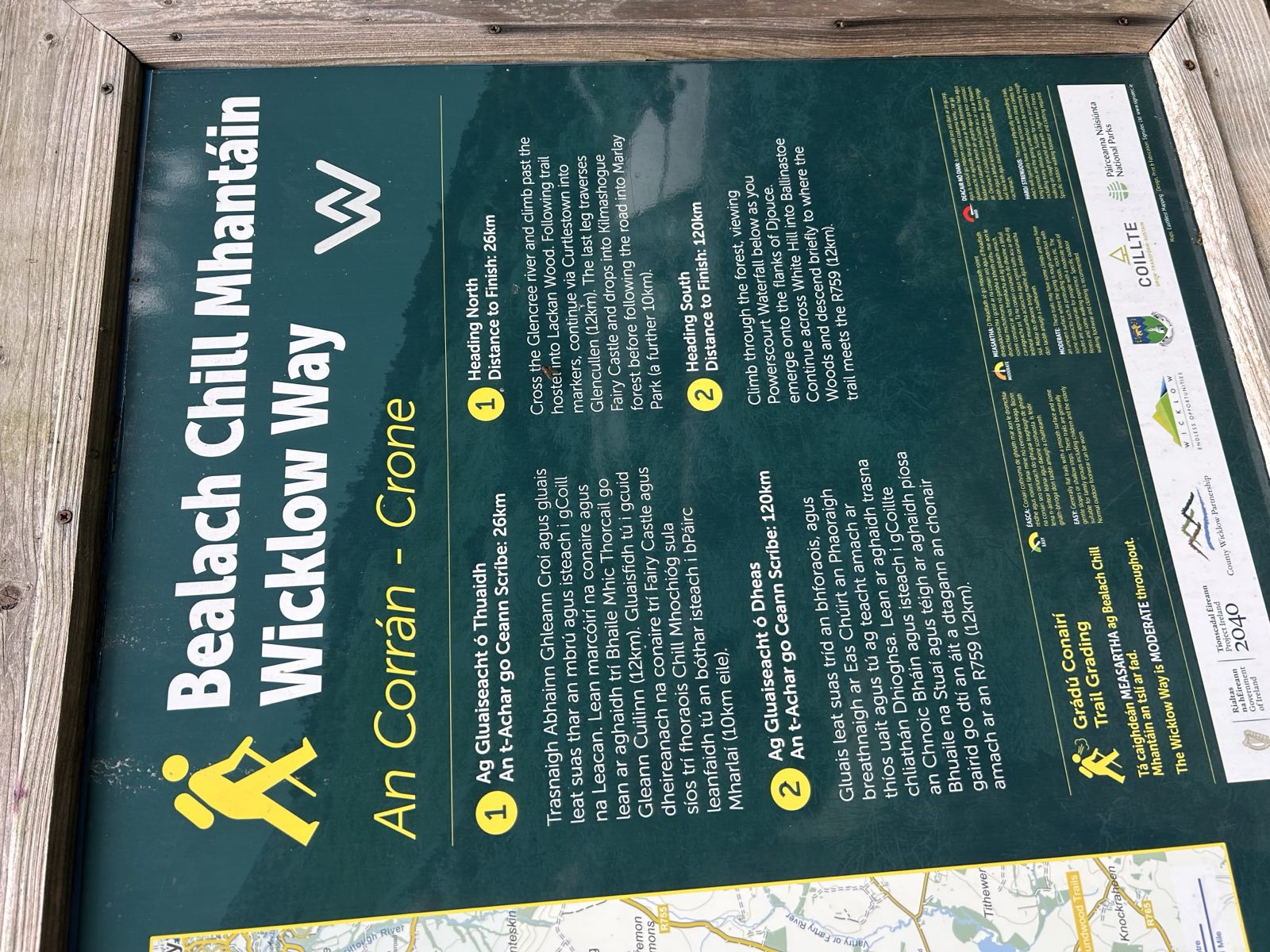
I parked at Crone Woods car park, a quarter of an hour from Enniskerry, forty-five minutes or so from Dublin if the N11 is behaving. The boards at the edge of the gravel are not shy about what this place is. One of them is titled Bealach Chill Mhantáin / Wicklow Way, and it names the stop An Corrán / Crone, as if you had arrived not at a trailhead but at a comma in a much longer sentence: 26 km still to go if you turn north toward Marlay, 120 km if you keep going south toward Clonegal.
There is no coffee van. On a pretty warm September Sunday that felt like a small omission, the sort you notice only because last week there was one. Cars were parked, but half the spaces were still empty: busier than a weekday, quieter than the internet would have you believe. Coillte keep the barrier on a seasonal clock: 7am to 9pm from April to September, 8am to 5pm the rest of the year. The road in is a single track through trees. Go slowly. Walkers appear out of the shade without much warning.
If you want coffee, Enniskerry is the village for it, on the way home.
A royal park, a rebellion, and other people’s oak
Crone is a state forest now, run by Coillte, Ireland’s forestry company. The trees on Maulin’s northern slopes are mostly Sitka spruce, a tall conifer brought from the Pacific Northwest and planted here in dense rows for timber. The glen underneath (a valley, in the older Irish and Scots sense) is older than that crop. It was once part of the Powerscourt Estate. As far back as the thirteenth century the steep sides were set aside as a royal hunting park, cover of vegetation and crag that would have suited deer and the people who chased them. In 1798 the same cover suited rebels, who hid in the woods; the British answer was the Military Road and a barracks at the head of the valley, the long grey line that still opens Wicklow up from the inside. In quieter centuries the oak from this property was well regarded. You walk through spruce. You are walking over a reputation for oak.
South of here the Way threads past Powerscourt’s Deer Park, from which Japanese sika were once kept and from which they have long since escaped, mixing with the native red deer of the uplands. That is a later story. At the car park you are still in the trees.
Into the spruce, onto the Way
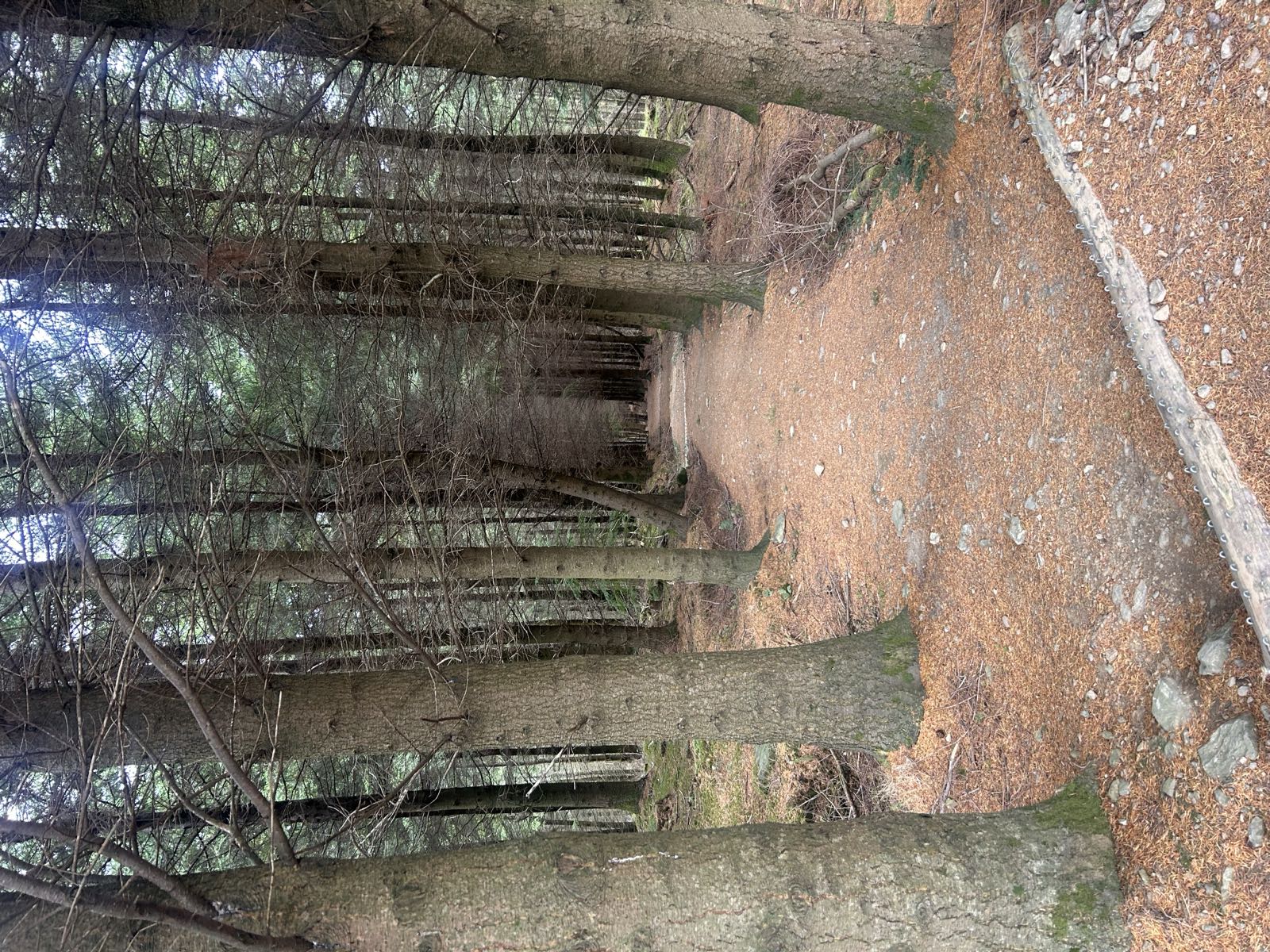
The first stretch is forest: a pale gravel corridor, moss on one bank and ferns on the other, the sort of path that makes a straight line feel like a decision. Part of this loop is the Wicklow Way itself, the yellow walking man sharing the first couple of kilometres with the red discs of the Maulin Mountain Loop, before the long-distance trail peels off toward Djouce and you stay with the hill.
Ireland’s first waymarked long-distance route runs 132 km from Dublin into Carlow. Knockree’s An Óige hostel sits just down-valley, on the Way’s own grounds, which is why Crone reads as a stopover rather than a dead end. You can start a life here, or a weekend, or just an eight-kilometre loop.
Ride Rock, and the fall of the Dargle
Then the path narrows and begins to mean it. Maulin is only 570 m. Last Sunday’s Djouce is 725, and still this felt steeper, a shorter mountain that does not bother with a long polite approach. The rock is dark blue-grey slate, phyllite and schist; you see it in the layered walls beside the path, in the benches let into the slope, in the way the hill keeps offering you a face instead of a ramp.
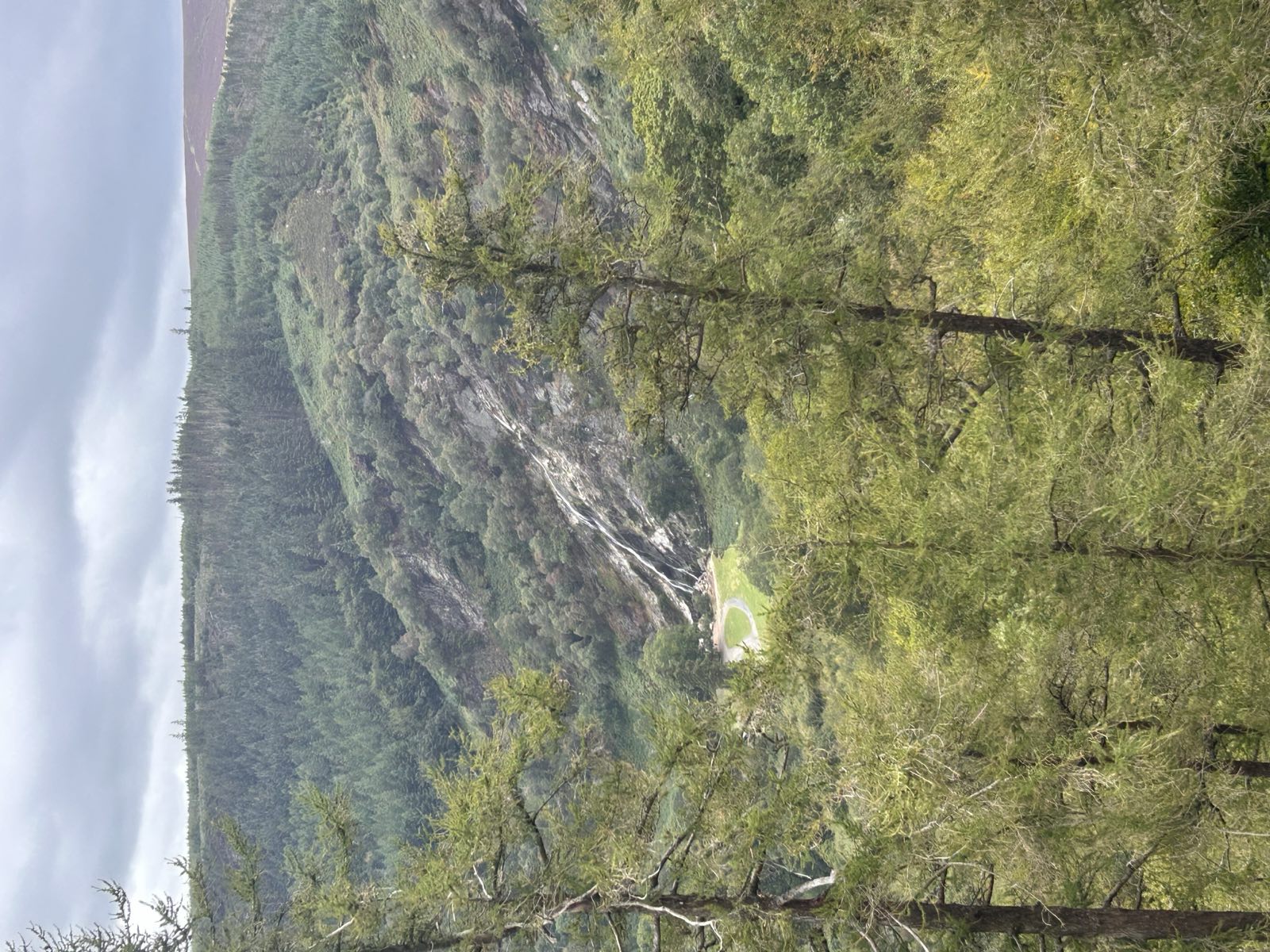
The trees give you a window, and there it is: Powerscourt Waterfall, a white thread down the far side of the glen, the Dargle making a 121-metre fuss of itself. It is often called the highest waterfall in Ireland, or in “these islands,” depending on who wrote the board. From Ride Rock you look across at it, not up from the lawn at the bottom. The Sugar Loaf sits in the same composition on a clearer day; Dublin Bay is supposed to show as well. I had the waterfall, which was enough.
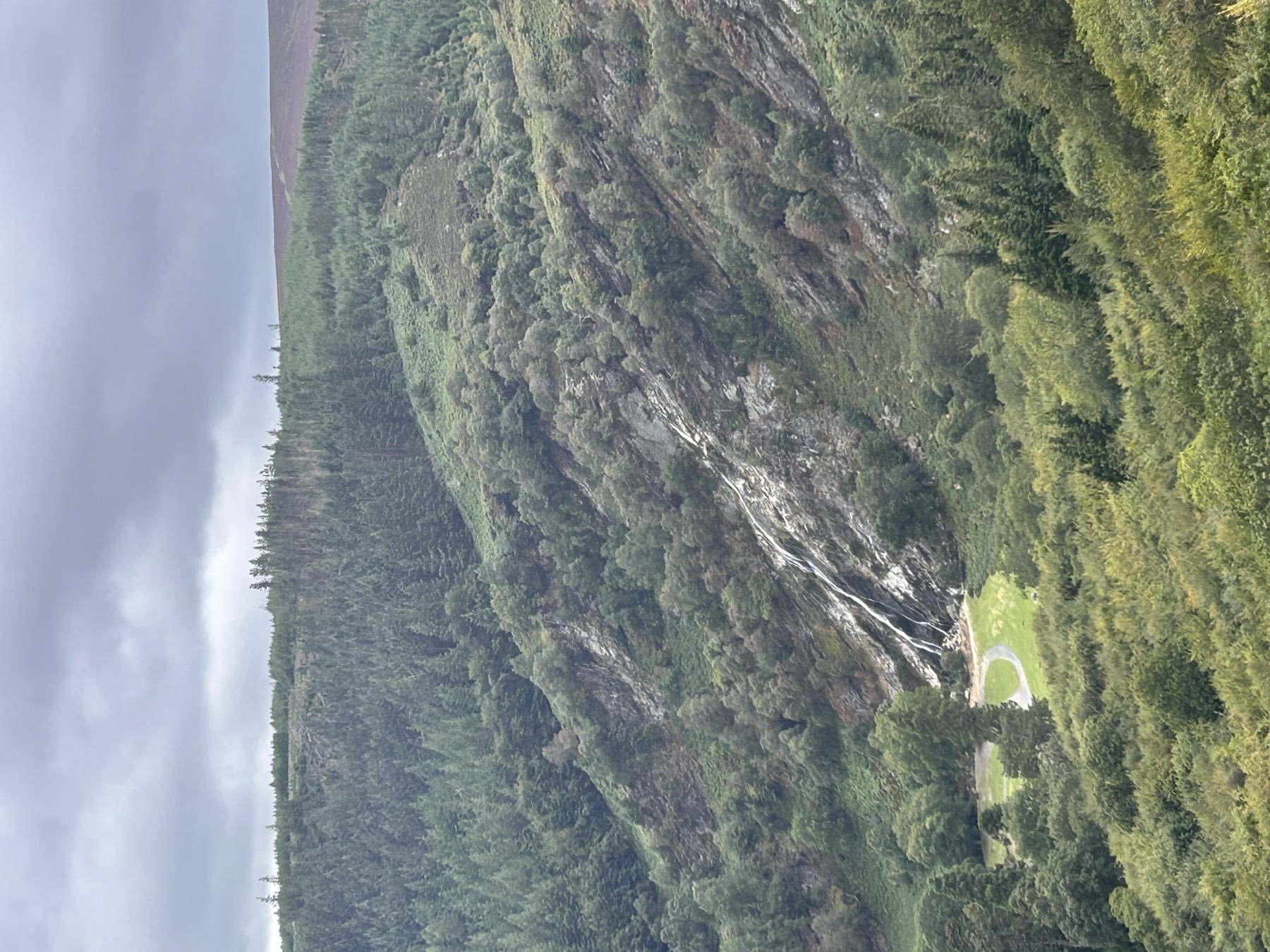
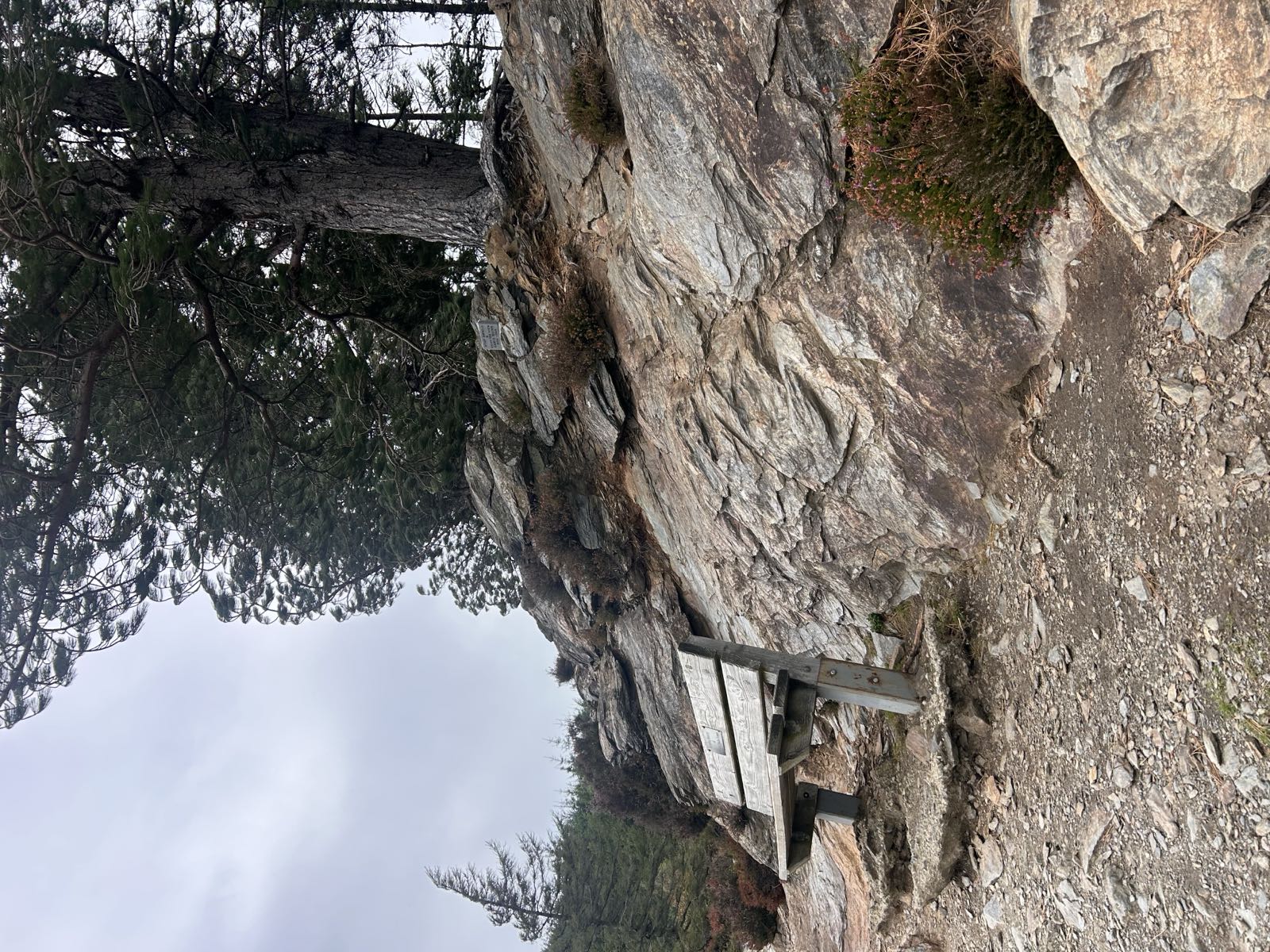
There is no way down to the falls from the trail. The bright grass and the horseshoe path at the base belong to the estate. You stay on the mountain and let the water do the falling.
Heather, and last Sunday’s hill
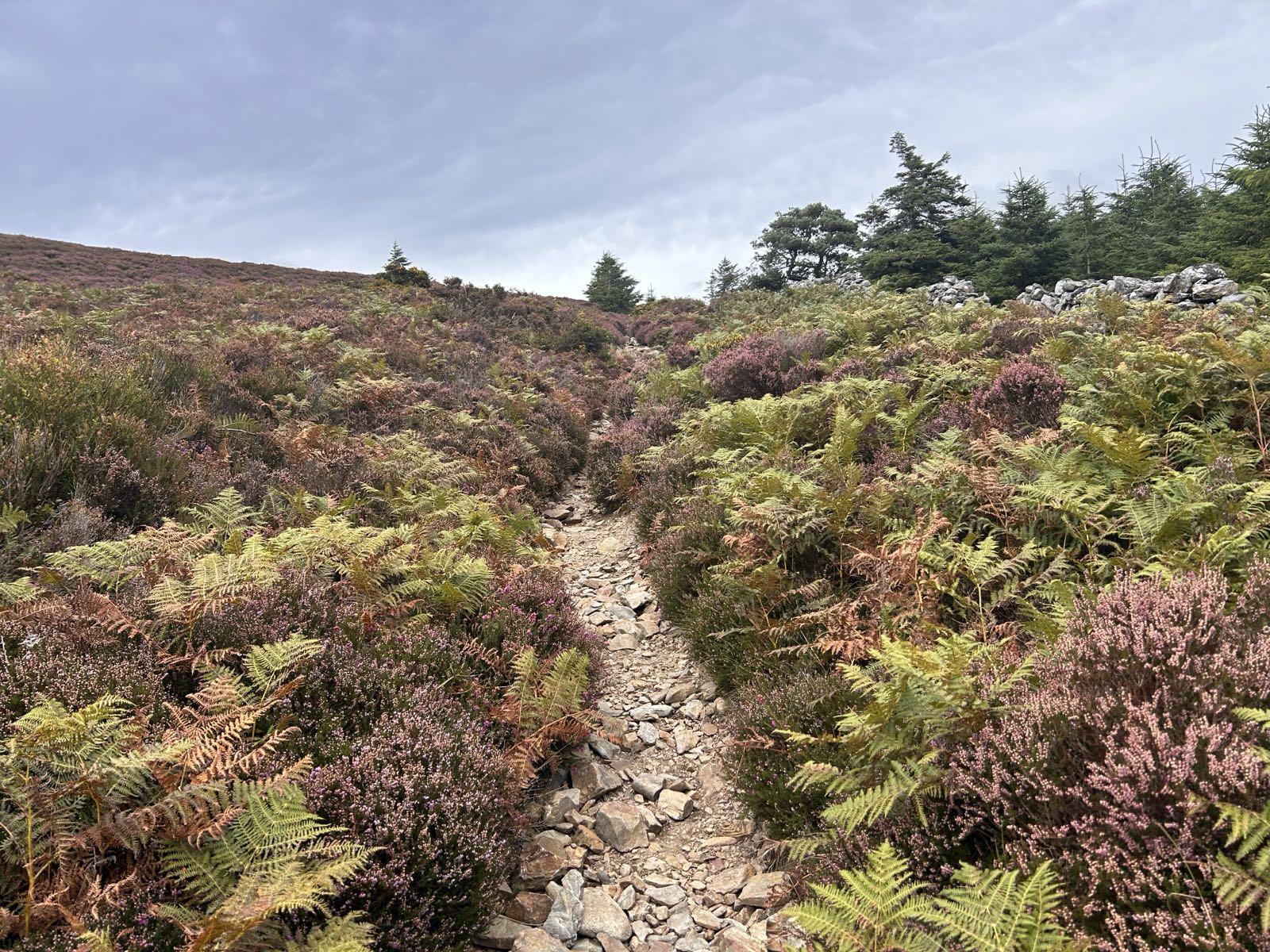
Above the trees the loop becomes heather and stone, purple still holding in early September, a single-file path that keeps asking for the next step a little sooner than you planned. I did eight kilometres in about two hours, with something like 500 metres of climbing in it, which is why a lower summit can still feel like more mountain than Djouce’s long boardwalk.
The loop as it sat on Strava, starting and finishing at Crone, with the Wicklow Way along the east side.
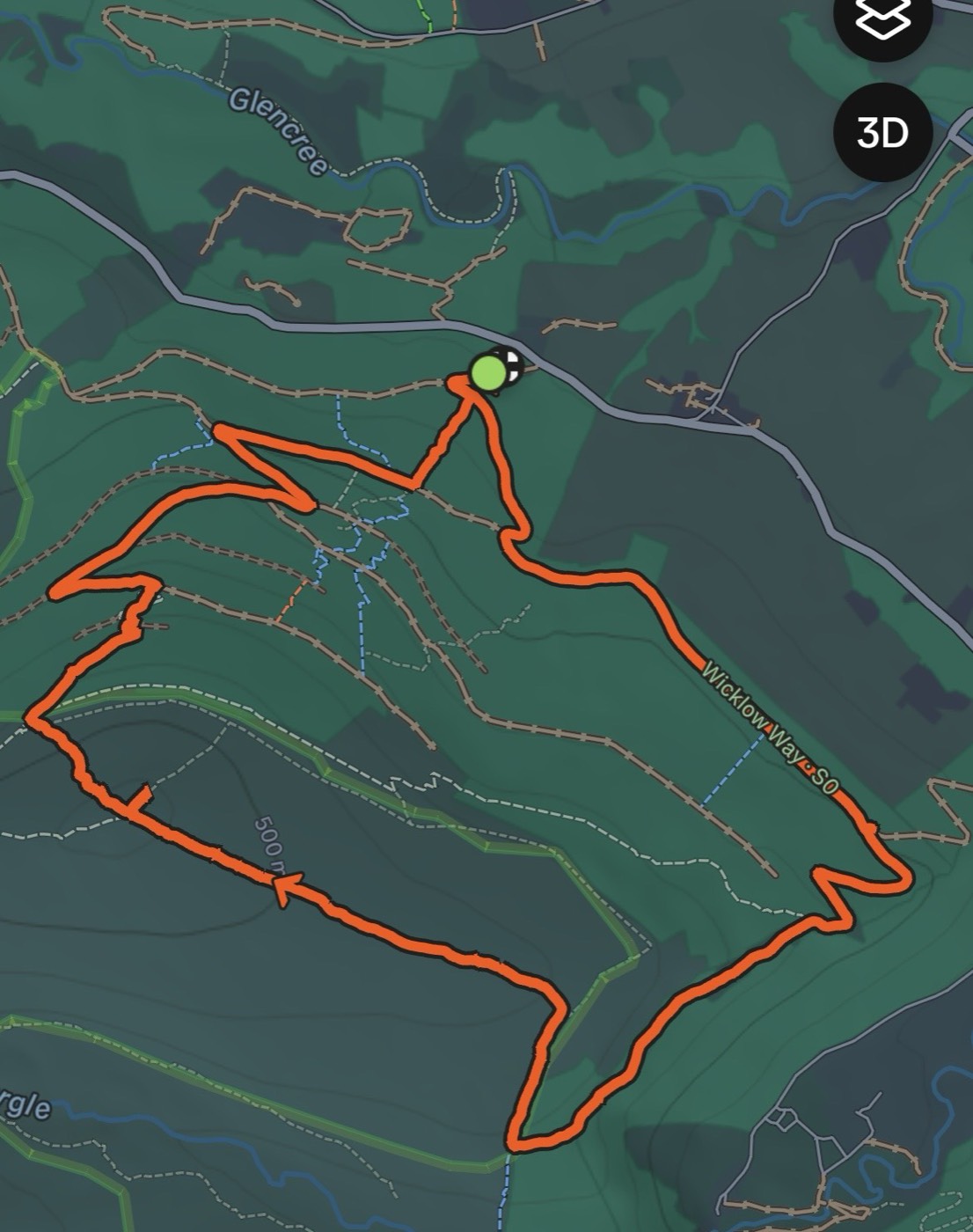
From the open ground I could see Djouce, last week’s cairn and cloud, sitting further south as if the two Sundays had agreed to look at each other. Maulin stands at the mouth of Glensoulan; the Circuit of Glensoulan is the longer day that strings Maulin to Tonduff, War Hill and Djouce and comes home to Crone after sixteen kilometres. I did not do that. I had the smaller hill, the waterfall, and the view of the bigger one.
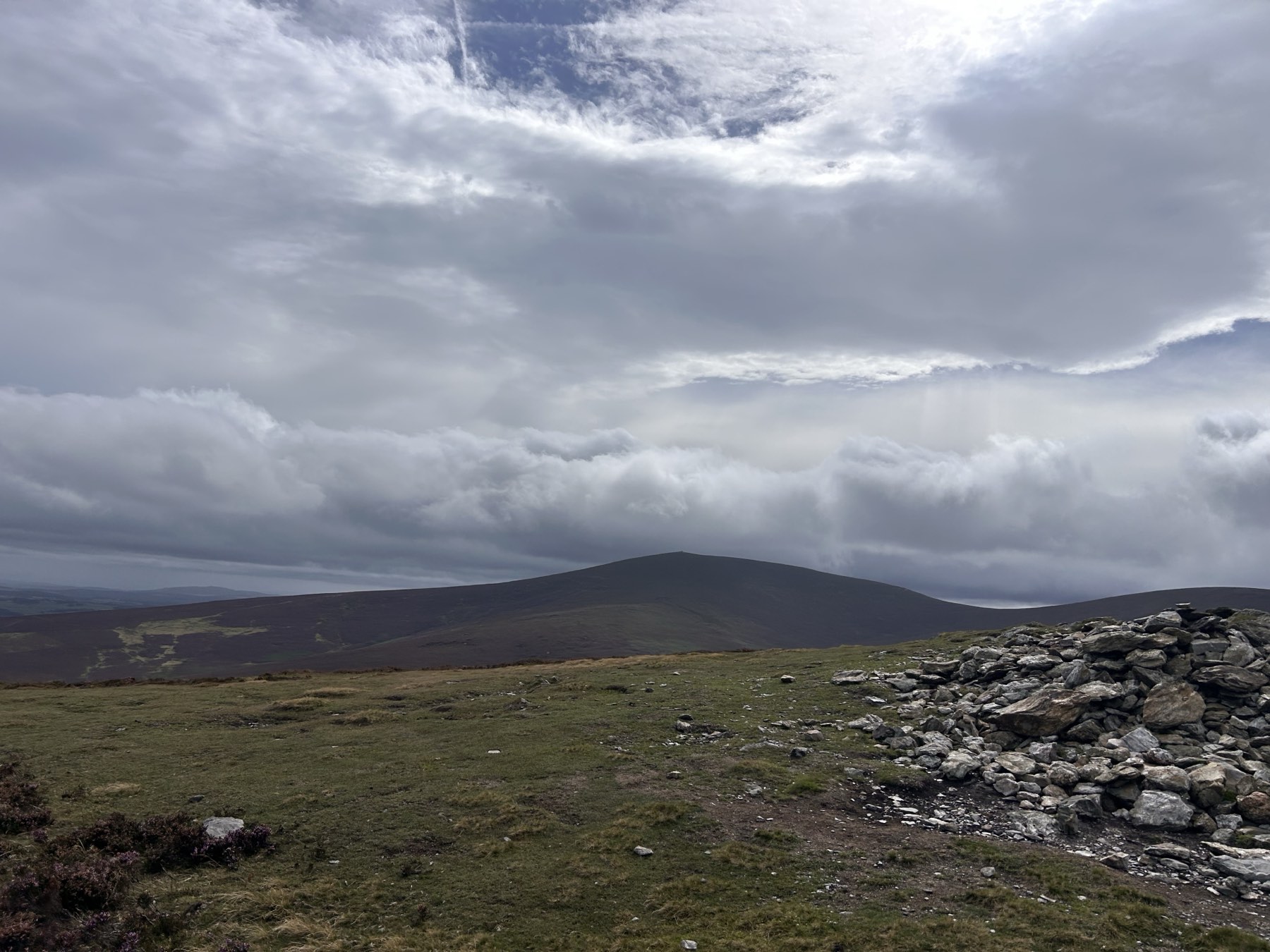
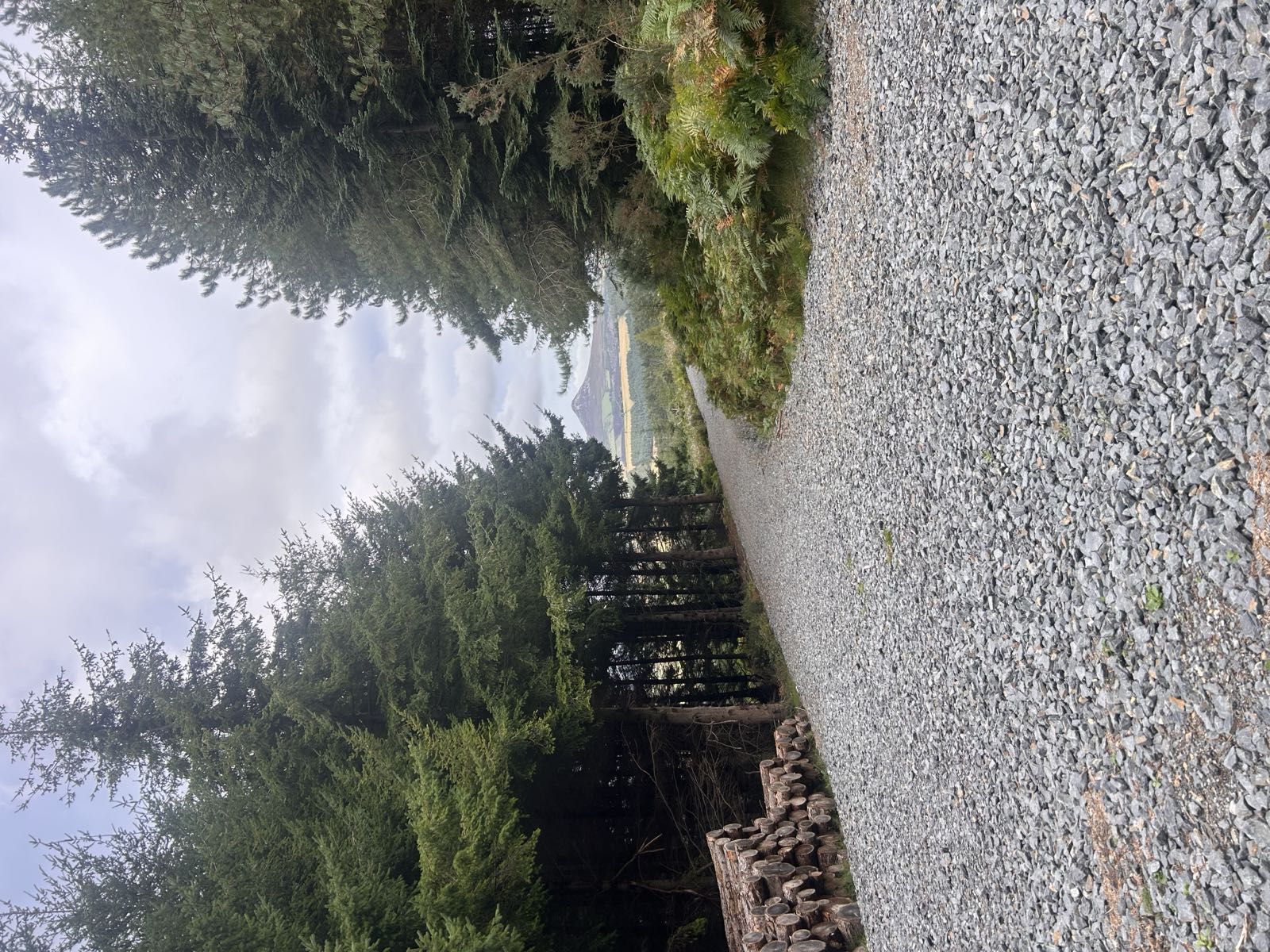
Coming down, the spruce opens once more and the Great Sugar Loaf sits in the gap, sharp against the cloud.
The unglamorous bits
- No coffee van at Crone. Enniskerry on the way home.
- Car park 7am–9pm in the summer season; check the board in winter.
- The official marked Maulin Loop is often listed around 6.6 km and two and a half hours. Going onto the summit itself stretches it. Mine was 8 km, moving time just under two hours.
- Coillte grade the walks from here as strenuous. Bring water. The boards at the start also say no fires, and no dogs.
- Phone signal was fine. You will not fall off the map, but you are still on a mountain.
Would I go again?
Yes. It is close, it is a real climb without being a day in the diary, and it gives you the waterfall from the side that makes it look like a secret. Last week Djouce. This week Maulin looking back at it. The Way continues either direction whenever I want the longer sentence.